
A bathroom renovation is one of the most searched renovation topics in Melbourne and one of the most widely misquoted. Published figures range from $10,000 to $70,000 and beyond, which tells you almost nothing useful about what your specific project will cost. The range is real, but the reason for it matters more than the numbers themselves.
This guide breaks down what actually drives bathroom renovation costs in Melbourne in 2026, what the three main cost tiers look like in practice, and what you should expect from a proper quote. The figures come from Northside Joinery's 16 years of delivering custom bathroom joinery across Melbourne suburbs from Richmond to Vermont South, Eltham to Lalor.
As a rough guide, every bathroom renovation is different and costs vary significantly based on the size of the space, the materials chosen, whether structural or plumbing changes are involved, and the trades required. The figures in this guide are indicative only and should not be used for budgeting without a proper assessment of your specific project.
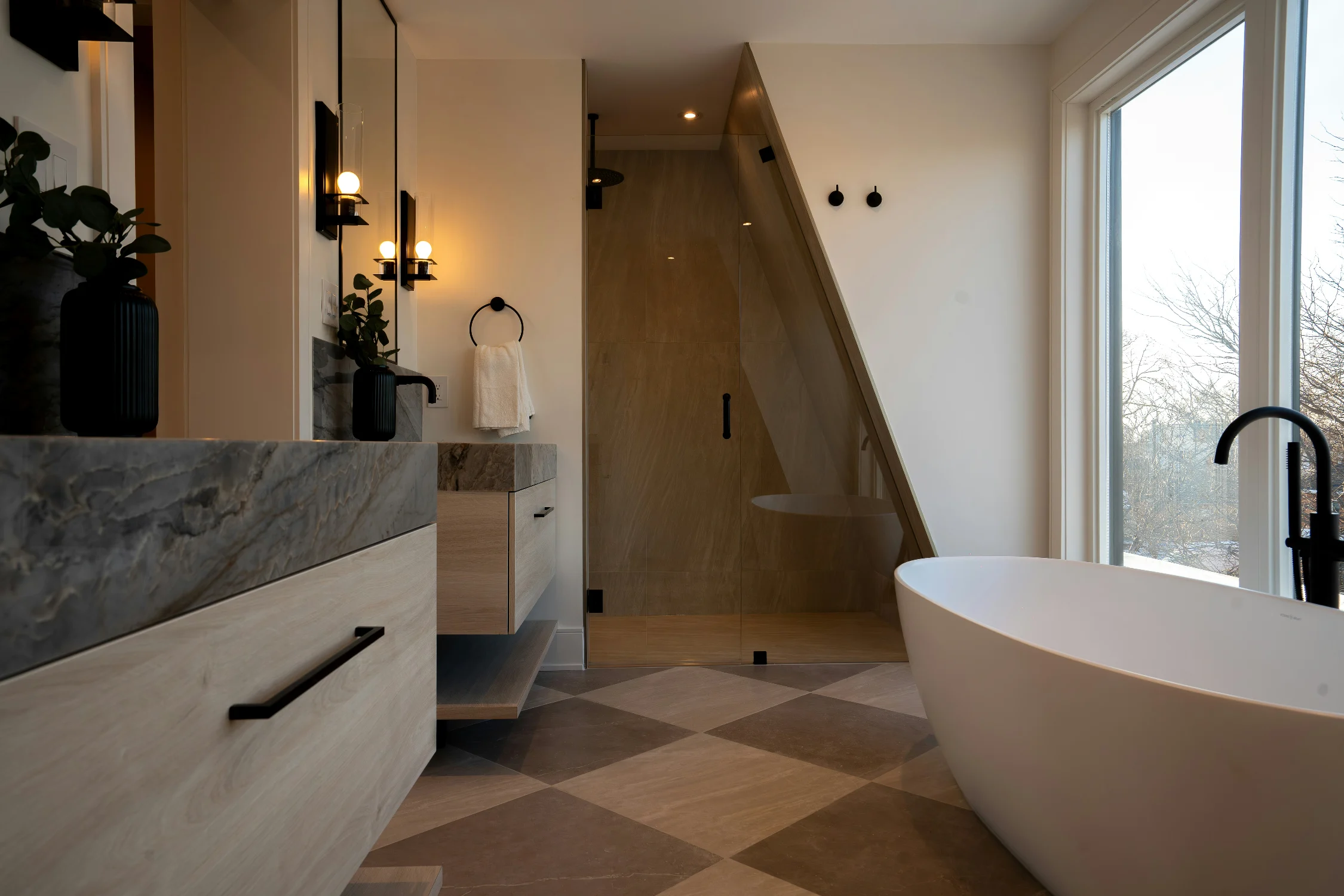
Why Bathroom Renovation Costs in Melbourne Vary So Much
The Housing Industry Association national average for a bathroom renovation is $26,000. Melbourne's market in 2026 runs higher than that figure due to strong trade demand, Victorian compliance requirements, and the cost of living pressures that have pushed labour rates consistently upward since 2021.
But the national average is almost meaningless for planning purposes. Two bathrooms of identical size can produce renovation quotes that differ by $20,000 or more depending on four variables: whether the layout is changing, what materials are specified, what the existing bathroom conceals, and which trades are required.
Understanding these four variables is more useful than any published average. They are the levers that determine where your renovation sits in the cost spectrum before a single tile is lifted.
The Four Variables That Drive Bathroom Renovation Costs in Melbourne
Whether the Layout Is Changing
The single most expensive decision in a bathroom renovation is whether the position of the toilet, shower, or basin is changing. Relocating any of these fixtures requires a licensed plumber to move the waste and water connections, which often involves cutting through concrete slabs or relocating floor joists. This work is not visible in a finished bathroom but it is consistently one of the largest cost items in a renovation budget.
If the existing layout works functionally, keeping fixtures in their current positions and focusing the budget on finishes, joinery, and waterproofing delivers far more visible result per dollar spent than plumbing relocation.
What the Existing Bathroom Conceals
Older Melbourne homes, particularly Victorian and Edwardian terraces and post-war brick veneer homes, frequently have non-compliant waterproofing, water-damaged substrates, and degraded plumbing that only becomes visible once the existing tiles and fixtures are removed.
A bathroom in a 1970s Melbourne home may look straightforward from the outside and reveal significant remediation requirements once the strip-out is complete. Waterproofing that does not meet Australian Standard AS 3740, rotted framing, or corroded pipes all add to the scope and cost of the renovation before the visible work even begins.
This is not unique to older homes. Bathrooms in apartments and townhouses built in the 1990s and 2000s are increasingly showing waterproofing failures as the original membranes reach the end of their service life. A proper strip-out and substrate assessment is the only way to know what a bathroom actually requires before committing to a scope and a budget.
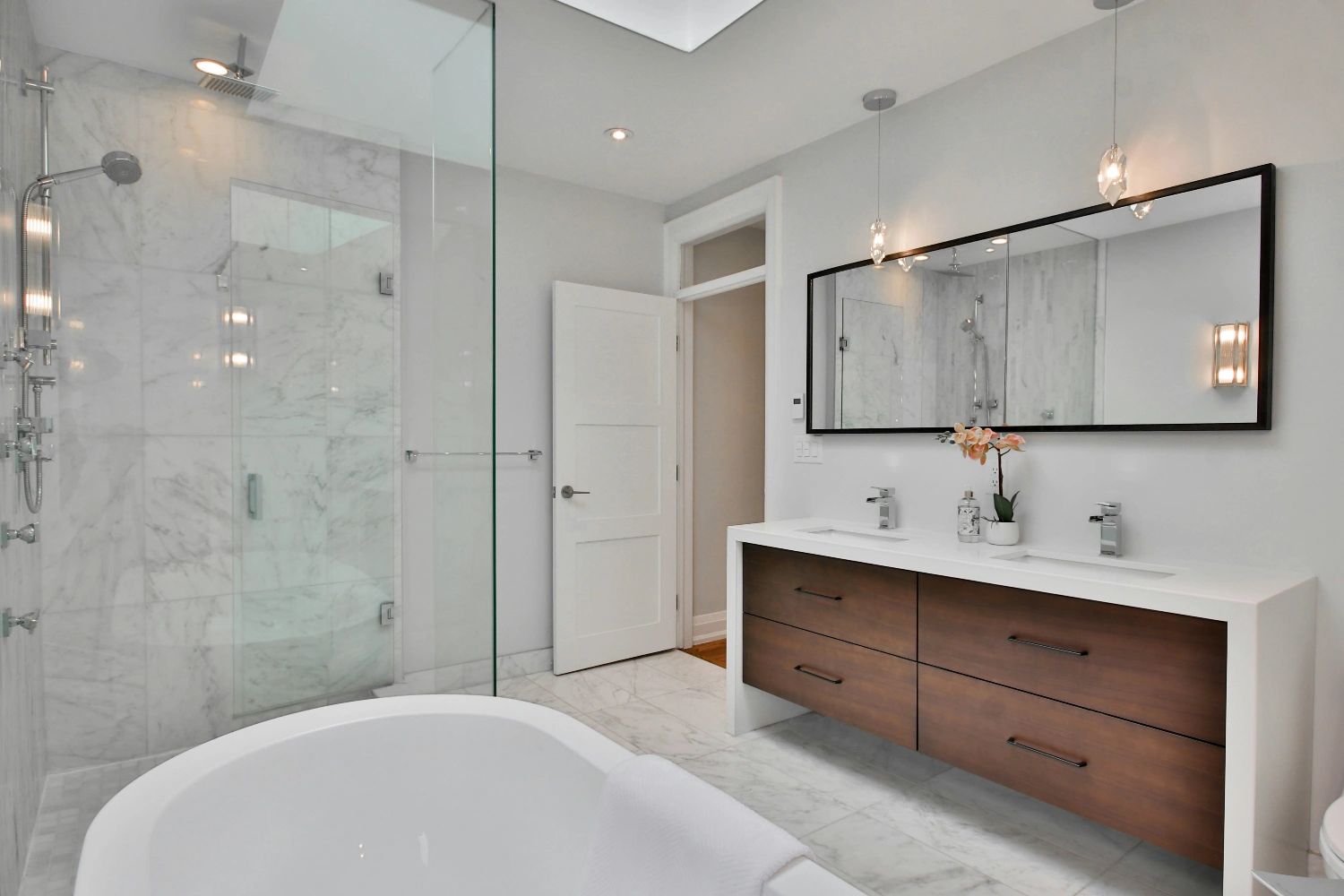
Materials and Finishes Specified
Materials are the most visible cost driver in a bathroom renovation and the one where the specification choices have the most direct impact on both the cost and the result.
Tiling is consistently the largest material cost in a Melbourne bathroom renovation. Professional tilers charge between $50 and $120 per square metre in Melbourne in 2026. Complex patterns including herringbone and chevron sit toward the upper end of that range. Large-format porcelain tiles require more precise substrate preparation and more careful installation than standard format tiles, which adds to both material and labour cost.
Waterproofing is non-negotiable regardless of budget. AS 3740 sets the minimum standard for waterproofing of wet areas in Australian residential construction. Cutting corners on waterproofing produces bathroom failures that cost significantly more to remediate than the original waterproofing would have cost to do correctly.
Custom joinery for the vanity is the single largest material variable after tiling. The difference between a laminate vanity with standard hardware and a custom floating vanity with two-pack doors, a 40mm stone benchtop, and Blum soft-close hardware throughout is significant in both cost and outcome. See our bathroom vanity cost guide for a detailed breakdown of vanity pricing specifically.
Trades Required
Labour and trades account for 50 to 60 percent of total bathroom renovation cost in Melbourne in 2026. A standard bathroom renovation requires a licensed plumber for all water and waste connections, a waterproofer or builder for substrate preparation and membrane application, a tiler for wall and floor tiling, and a cabinet maker for custom joinery installation. Where electrical work is involved, a licensed electrician is required.
Coordinating multiple trades is one of the main sources of cost and programme blowout in bathroom renovations. Trades arriving out of sequence, or a subsequent trade discovering that a previous trade's work needs to be redone, adds cost and time that no renovation budget anticipates. Northside Joinery manages the joinery component of bathroom renovations and coordinates with trades to ensure the joinery scope integrates correctly with the work that precedes and follows it.
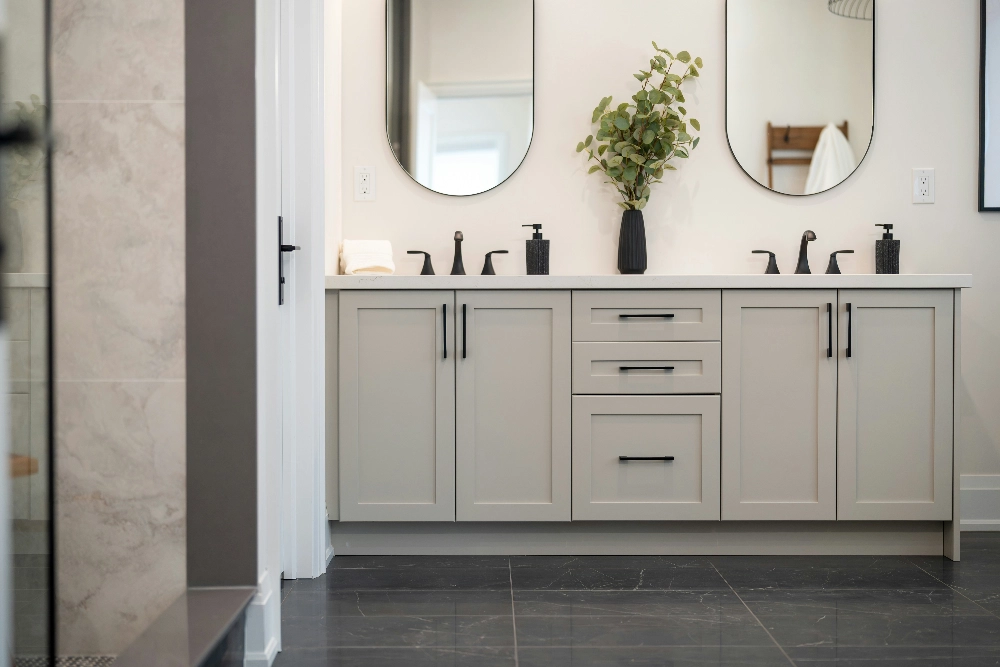
Bathroom Renovation Cost Tiers in Melbourne 2026
The figures below are rough guides based on current Melbourne market conditions and Northside Joinery's experience delivering bathroom joinery across Melbourne. Every renovation is different. These figures should not be used for budgeting without a proper assessment of your specific bathroom, its existing condition, and the scope of work required.
Cosmetic Refresh: $8,000 to $15,000
A cosmetic refresh replaces what is visible without changing the layout or the structure. New vanity, new tapware, new mirror, new accessories, and a paint refresh to the ceiling and any unpainted surfaces. No tiling, no plumbing relocation, no structural changes.
This tier suits bathrooms where the layout works well, the tiles are in good condition, the waterproofing is intact, and the goal is a meaningful visual update without a full renovation budget. It also suits rental properties and investment properties where the return on investment does not justify a full renovation spend.
What moves this number higher: replacing any tiling even partially, discovering waterproofing issues behind existing fixtures, adding a new shower screen or replacing a bath, requiring any electrical work.
Full Mid-Range Renovation: $15,000 to $35,000
A complete bathroom renovation covering full strip-out, new waterproofing to AS 3740, wall and floor tiling, new shower screen or bath, new vanity with stone benchtop, new tapware and fixtures throughout, and all trades coordinated. Layout stays broadly the same with minimal plumbing relocation.
This is the most common tier for main bathroom renovations across Melbourne. A $20,000 budget within this tier typically delivers new tiling throughout, a custom vanity with stone benchtop, quality tapware, a new shower screen, and compliant waterproofing. It does not extend to plumbing relocation, heated floors, or premium imported materials.
What moves this number higher: any plumbing relocation, large-format or imported tiles, custom shower niche or built-in shelving, heated floor system, freestanding bath, premium stone or designer tapware.
Premium or Luxury Renovation: $35,000 to $70,000 and above
A premium renovation covers everything in the mid-range tier plus structural changes where needed, plumbing relocation, underfloor hydronic heating, premium natural stone throughout, a freestanding bath, floor-to-ceiling large-format porcelain or stone tiles, custom joinery across multiple elements, designer tapware and fixtures, and integrated lighting design.
This tier is appropriate for master bathrooms in high-value Melbourne homes where the bathroom is a significant feature of the property and the renovation is intended to meaningfully increase resale value. It is also appropriate where structural work is required and the opportunity exists to redesign the space layout at the same time.
Important: these figures are rough guides only. Bathroom renovation costs in Melbourne vary significantly depending on the size of the bathroom, the existing condition of the space, the materials chosen, whether structural or plumbing changes are involved, and the specific trades required. Do not use these figures for budgeting without a proper assessment of your bathroom by a licensed professional. Every project is assessed individually before any pricing is provided.
Planning a bathroom renovation in Melbourne? Northside Joinery handles custom bathroom joinery across Melbourne including vanities, shaving cabinets, linen towers, and storage. Book a Precision Measure to get a clear scope and price for your joinery before you commit to anything.
What the Most Expensive Part of a Bathroom Renovation Actually Is
The answer surprises most people planning their first bathroom renovation: labour and trades, not materials, account for the largest share of total cost. In Melbourne in 2026, labour and trades consistently represent 50 to 60 percent of total bathroom renovation spend. Materials and fixtures represent 30 to 35 percent. Design, permits, and preliminaries make up the remainder.
Within the labour component, tiling is the largest single trade cost in most Melbourne bathroom renovations. A standard Melbourne bathroom of 5 to 8 square metres requires significant tiling to walls and floor, all of which must be installed over a compliant waterproofing membrane. The combination of waterproofing labour, substrate preparation, and tiling labour is consistently the largest line item before joinery or fixtures are considered.
The second most common surprise is plumbing relocation cost. Moving a toilet or relocating floor waste requires cutting through a concrete slab or relocating timber floor framing, neither of which is cheap or quick. If the existing layout works, the most cost-effective renovation keeps plumbing in its current position and redirects the budget to finishes and joinery.
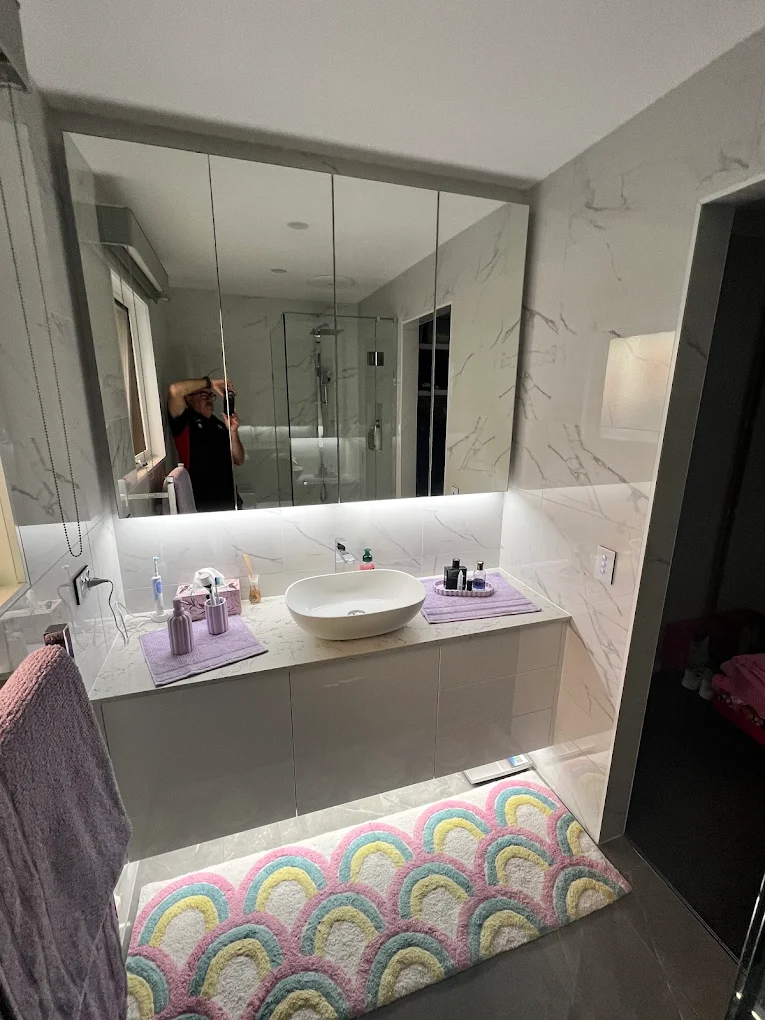
What Adds the Most Value to a Bathroom Renovation in Melbourne
Not every dollar spent on a bathroom renovation returns the same value. Research on Melbourne property consistently shows that bathroom renovations deliver strong returns on investment, but the composition of that spend matters. The elements that add the most value relative to their cost are:
Custom joinery for the vanity. The vanity is the focal point of any bathroom and the element that most immediately signals quality to a prospective buyer. A custom floating vanity with a stone benchtop and quality hardware reads as premium. An off-the-shelf unit does not, regardless of how well the rest of the bathroom is finished.
Compliant waterproofing. This is invisible once the tiles are on but it is the single most important investment in a bathroom renovation. Non-compliant waterproofing produces bathroom failures that cost many times the original waterproofing cost to remediate. A buyer's building inspector will flag it, and a vendor disclosure of known waterproofing issues significantly affects sale price and conditions.
Large-format tiles in a consistent palette. Large-format tiles make a small bathroom feel significantly larger. A consistent palette of two or three materials throughout the space reads as considered and cohesive. Dated or inconsistent tile choices are the first thing buyers notice and the first thing they mentally price into renovation costs when making an offer.
Heated floors in a Melbourne climate. Underfloor heating in a Melbourne bathroom is not a luxury in the same way it might be considered in warmer climates. Melbourne winters make a heated bathroom floor a genuinely appreciated daily experience. At $2,500 to $5,000 for a hydronic system in a standard bathroom, it is one of the most cost-effective premium additions available in a full renovation budget.
Does a Bathroom Renovation Need Council Approval in Melbourne?
Most bathroom renovations in Melbourne that do not involve structural changes or plumbing relocation do not require a building permit. The renovation proceeds under the supervision of the licensed trades involved, each of whom issues a certificate of compliance for their scope of work on completion.
Work that does require a building permit includes: removing or altering a load-bearing wall, relocating plumbing that requires cutting through a concrete slab or relocating floor joists, and any work that changes the footprint or structure of the bathroom.
Regardless of whether a permit is required, all waterproofing must comply with AS 3740 and all plumbing work must be completed by a licensed plumber who issues a certificate of compliance. These are not optional -- they are legal requirements under Victorian building law and they are the documents that protect you in any future sale or insurance claim involving the bathroom.
How to Get an Accurate Bathroom Renovation Quote in Melbourne
Start with a strip-out assessment if the bathroom is older. The most common source of bathroom renovation budget blowout is discovering non-compliant waterproofing or substrate damage after strip-out has begun. In any bathroom older than 15 years, budgeting a contingency of 10 to 15 percent for unknown conditions is prudent.
Decide on layout before getting quotes. Whether plumbing is staying in its current position or being relocated is one of the biggest scope variables in a bathroom renovation quote. Decide this before approaching trades, not during the quote process.
Get the joinery specification right before comparing quotes. Laminate and two-pack finishes are not the same product. Stone and laminate benchtops are not comparable on cost alone. Make sure any quotes you are comparing specify identical materials, not just similar-looking results.
For joinery, book a Precision Measure. An accurate joinery quote for a bathroom renovation cannot be produced from a photo or a floor plan. The existing plumbing positions, wall substrate, floor level, and available space all affect the scope and the price. Northside Joinery's Precision Measure ($175, redeemable on your project) produces a detailed scope and a clear price for the joinery component before any commitment is made.
Ready to plan your bathroom renovation? James Taliana has been delivering custom bathroom joinery across Melbourne for 16 years. Contact Northside Joinery today for an honest conversation about the joinery component of your renovation before you commit to anything.
Frequently Asked Questions
How much does a bathroom renovation cost in Melbourne?
As a rough guide, bathroom renovation costs in Melbourne in 2026 range from approximately $8,000 to $15,000 for a cosmetic refresh through to $35,000 to $70,000 or more for a full luxury renovation with structural changes. A mid-range full renovation with quality finishes typically sits between $15,000 and $35,000. The Housing Industry Association national average is $26,000, though Melbourne's market runs higher due to trade demand and Victorian compliance requirements. These figures are indicative only and vary significantly based on the size of the bathroom, the materials chosen, the trades required, and whether any structural or plumbing relocation work is involved.
What is the most expensive part of a bathroom renovation in Melbourne?
Labour and trades typically account for 50 to 60 percent of total bathroom renovation cost in Melbourne. Within that, tiling and waterproofing are consistently the largest cost components, followed by plumbing and fixtures. Custom joinery for the vanity is the largest material cost variable. Plumbing relocation, where the position of the toilet, shower, or basin is being changed, is one of the most expensive decisions in a bathroom renovation and should be avoided where possible if budget is a priority.
Can you renovate a bathroom for $20,000 in Melbourne?
Yes, a solid mid-range bathroom renovation in Melbourne is achievable for $20,000 in 2026, provided the layout is not being changed significantly and plumbing connections are staying in the same positions. A $20,000 budget typically covers new tiling throughout, a custom vanity with stone benchtop, updated tapware and fixtures, waterproofing to Australian standards, and a new shower screen. It does not typically extend to plumbing relocation, heated floors, freestanding baths, or premium imported materials. Every project is different and a proper quote is required to confirm what is achievable within your specific budget.
How long does a bathroom renovation take in Melbourne?
As a general guide, a full bathroom renovation in Melbourne takes 3 to 6 weeks from demolition to completion depending on the scope and complexity. Cosmetic refreshes involving no structural changes take less time. Full renovations involving plumbing relocation, tiling, waterproofing, and custom joinery take longer. Delays are common when fixtures are on backorder or unexpected issues are discovered during strip-out, such as water damage or non-compliant waterproofing in older homes.
Does a bathroom renovation need council approval in Melbourne?
Most bathroom renovations in Melbourne that do not involve structural changes or plumbing relocation do not require a building permit. However, any work that involves relocating plumbing, removing load-bearing walls, or significantly altering the structure of the building will typically require a building permit from your local council in Victoria. Waterproofing work must comply with Australian Standard AS 3740 regardless of whether a permit is required. A licensed plumber must complete all plumbing work and issue a certificate of compliance on completion.