
Acoustic panelling is one of the most misunderstood products in the home improvement market. People searching for it are often looking for two very different things: some want to improve how a room sounds, others want to stop noise travelling between rooms. These are different problems with different solutions, and understanding which one you are trying to solve is the most important step before spending anything on acoustic panels.
Northside Joinery installs acoustic panels across Melbourne for residential and commercial clients. Installation cost depends on the panel material chosen, the area to be treated, ceiling height, and the complexity of the job. Materials are additional to the installation cost and vary significantly by panel type, from entry-level recycled PET polyester through to premium fire-rated commercial timber panels. This guide covers what acoustic panels actually do, what the five main panel materials are and how they compare, what the total installed cost looks like across different project types, and why professionally installed panels deliver results that DIY products cannot match.
Acoustic panel installation costs vary based on the material chosen, the area to be treated, ceiling height, and the complexity of the job. Material costs are additional and vary significantly by panel type. The figures in this guide are indicative only and should not be used for budgeting without a proper assessment of your specific space and acoustic goals.
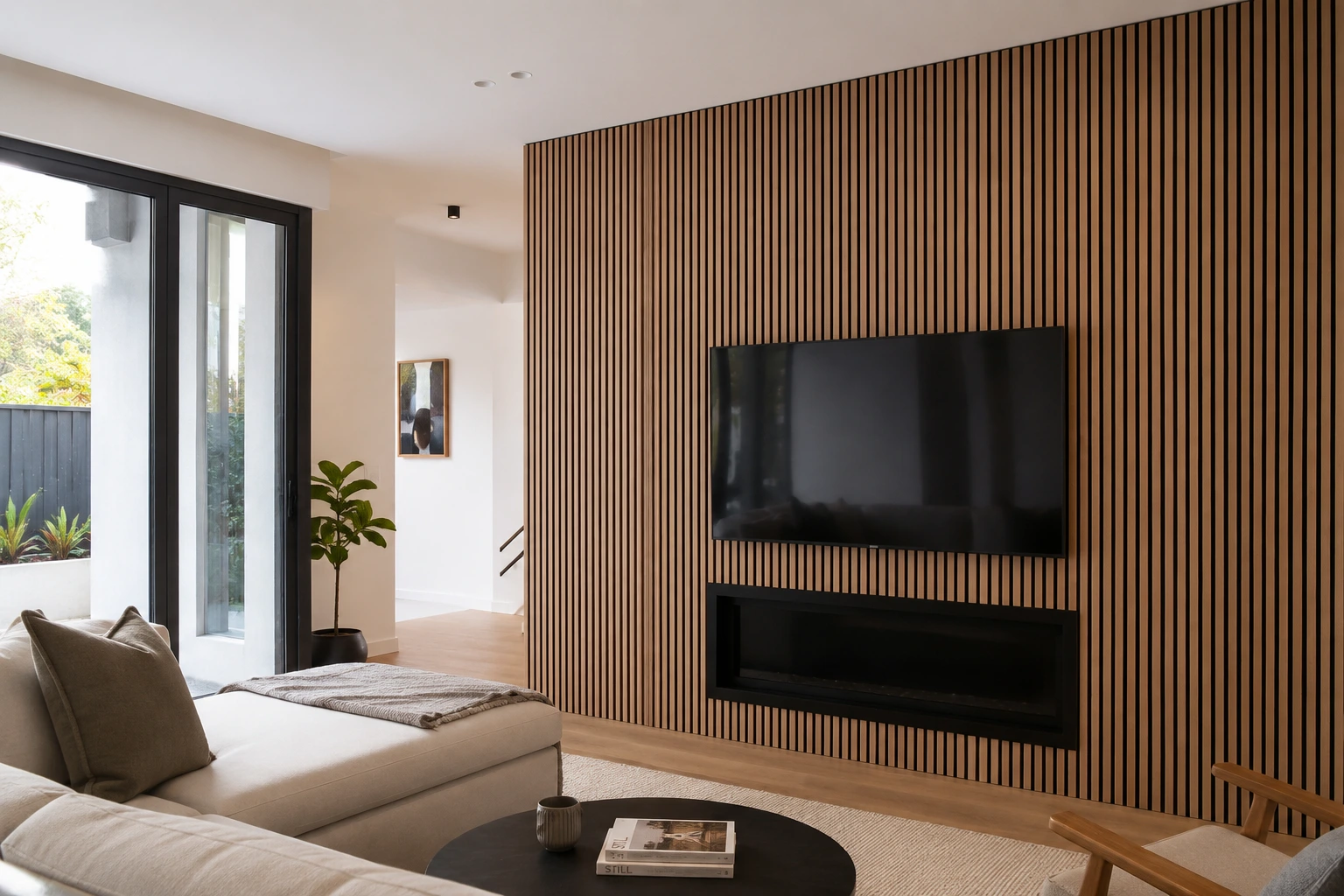
Acoustic Treatment vs Soundproofing: The Distinction That Changes Everything
The single most important thing to understand before purchasing acoustic panels is the difference between acoustic treatment and soundproofing. They are frequently confused and they solve completely different problems.
Acoustic treatment improves the sound quality within a room. Acoustic panels absorb sound waves that bounce off hard surfaces: plasterboard walls, glass, timber floors, concrete ceilings, reducing echo, reverberation, and the build-up of reflected sound that makes a room feel noisy, echoey, or fatiguing. A room treated with acoustic panels sounds clearer, quieter, and more comfortable to be in. Conversations are more intelligible. Music sounds more accurate. Home theatre audio is more controlled. Recording quality improves significantly.
Soundproofing prevents sound from travelling between rooms or through walls and floors. It uses mass, decoupling, and airtight sealing to block the transmission of sound. This is a structural and construction solution, not a panel solution.
Acoustic panels from Northside Joinery provide acoustic treatment. They will significantly improve how a room sounds. They will not stop sound from travelling to the room next door, block traffic noise from outside, or prevent your neighbour from hearing your television. If that is the goal, a different approach is needed. Understanding this before purchasing panels is the difference between a result that meets expectations and one that does not.
Do Acoustic Panels Actually Work?
Yes, when the right panel is installed in the right location for the right application, acoustic panels make a significant and immediately audible difference to how a room sounds.
The science is straightforward. Hard, flat surfaces reflect sound. When sound bounces between multiple hard surfaces it builds up as reverberation, creating the echoey, muddy quality that makes large rooms with hard floors and bare walls feel unpleasant to be in. Acoustic panels absorb that reflected energy before it can build up. The room sounds quieter, clearer, and more controlled without any change to its physical size or layout.
The variables that determine how effective acoustic panels will be in a specific space are: the surface area of panels relative to the room volume, the placement of panels relative to the primary reflection points, the NRC (Noise Reduction Coefficient) rating of the panel material, and the frequency range the panels are designed to address. A professional installation considers all four. A DIY installation with panels in the wrong location or with an NRC rating insufficient for the space will underperform regardless of how much is spent on the panels themselves.
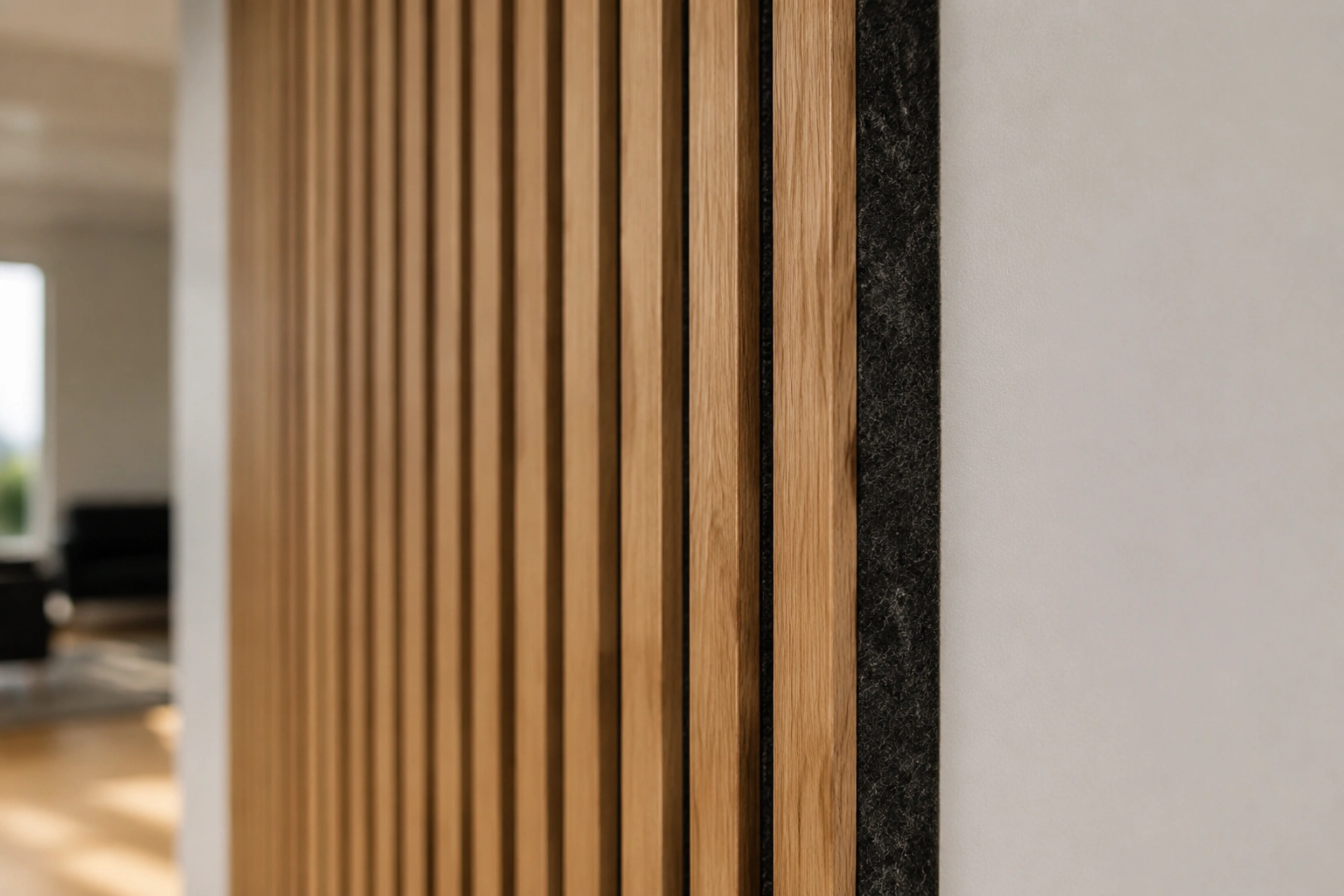
The Five Acoustic Panel Materials Northside Joinery Works With
Not all acoustic panels are the same. The material determines the acoustic performance, the aesthetic result, the fire rating, and the cost. Northside Joinery works across five panel types depending on the application and the brief.
Mineral Wool Panels
Mineral wool is one of the highest-performance acoustic absorption materials available. It offers excellent NRC ratings across a broad frequency range and is particularly effective at absorbing mid and high frequencies where speech intelligibility is most affected. Mineral wool panels are available in fabric-wrapped configurations that suit both residential and commercial environments. They are fire rated and suitable for commercial applications requiring Class 1 compliance to AS/NZS 3837:1998.
Mineral wool is the material of choice for commercial applications where acoustic performance is the primary requirement: conference rooms, open plan offices, restaurants, and commercial spaces where speech intelligibility and background noise control are critical.
Rigid Fibreglass Panels
Rigid fibreglass panels offer similar acoustic performance to mineral wool with a firm, stable substrate that holds its shape precisely. They are well-suited to applications where the panel needs to maintain exact dimensions over time, including flush-mounted ceiling panels and precisely fitted wall systems. Rigid fibreglass is commonly specified in commercial and professional audio applications where consistent performance across the full panel area is required.
Recycled PET Polyester Fibre Panels
Recycled PET panels are made from post-consumer plastic bottles processed into a dense, flexible acoustic material. They offer good acoustic performance, excellent sustainability credentials, and are available in a wide range of colours and textures. PET panels do not require a fabric wrap and can be cut to custom shapes, making them a popular choice for design-led residential and commercial applications where the panel is a visible design element rather than a hidden acoustic component.
PET panels sit at the lower end of the material cost range, making them an accessible option for residential projects where both acoustic improvement and aesthetic appeal are priorities. They do not carry mould, a common concern, and are suitable for environments with moderate humidity.
Open Cell Acoustic Foam
Open cell acoustic foam is the most familiar acoustic panel material for most people, associated with recording studios and home music rooms. It is effective at absorbing mid and high frequencies and is the most cost-effective acoustic panel material available. Its limitations are that it is less effective at low frequencies, it is not suitable for commercial applications requiring fire ratings, and its visual appearance suits some applications but not others.
Open cell foam is appropriate for recording setups, podcast rooms, home offices, and gaming rooms where acoustic control is needed and the aesthetic context suits the material.
Wood Wool Panels
Wood wool panels are made from long wood fibres bonded with a cementitious binder, producing a rigid panel with a distinctive textured surface. They offer good acoustic absorption, strong fire resistance, and a robust surface that withstands impact better than fabric-wrapped or foam panels. Wood wool is well-suited to commercial applications where durability is a priority alongside acoustic performance: schools, gyms, community halls, and high-traffic commercial spaces.
Wood wool panels have a raw, industrial-organic aesthetic that suits contemporary commercial interiors and is increasingly popular in Melbourne hospitality design.
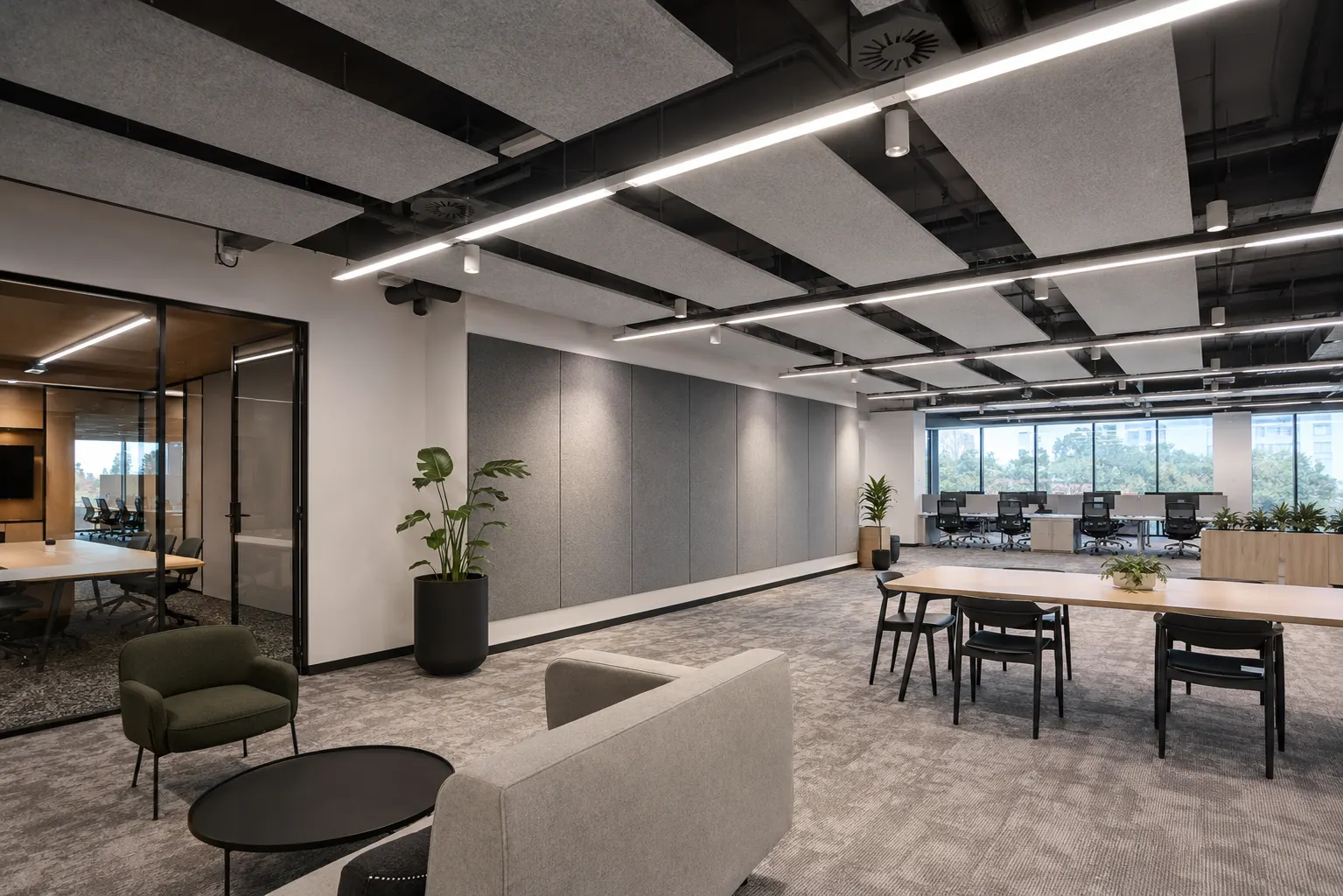
Acoustic Panelling Cost in Melbourne 2026
Acoustic panel installation cost from Northside Joinery depends on the panel material chosen, the area to be treated, ceiling height, and the complexity of the installation. Panel materials are additional and are either supplied by the client or sourced through Northside Joinery based on the application and budget.
The total installed cost per project depends on four variables: the area to be treated in square metres, the panel material selected, the ceiling height and complexity of the installation, and whether any substrate preparation or framing is required before panels can go up.
Residential Room Treatment
A partial wall treatment for a residential living room, home office, or bedroom typically covers 10 to 25 square metres of wall area. This is not the full wall area of the room. Acoustic treatment rarely requires covering every surface. Targeted placement at primary reflection points delivers the most effective result with the least material.
Total installed cost for a residential room treatment varies based on the panel material selected and the area covered. Entry-level recycled PET polyester panels sit at the lower end of the cost range. Mineral wool, rigid fibreglass, and wood wool panels sit higher. A site assessment from Northside Joinery will produce a clear recommendation and accurate pricing before any panels are purchased or installed.
What moves this higher: full wall coverage rather than targeted placement, premium materials, high ceilings requiring scaffolding or elevated access, custom panel shapes or configurations.
Home Theatre or Recording Room
A home theatre or dedicated recording room typically requires more comprehensive treatment than a standard living room: more surface area covered, panel placement informed by the specific audio use, and potentially ceiling treatment as well as wall treatment.
Total installed cost for a home theatre or recording room depends on room size, ceiling height, and material specification. Open cell foam suits a home recording setup. Mineral wool with fabric wrapping suits a dedicated home theatre where maximum acoustic control and a premium finish are both required. Contact Northside Joinery for a site assessment and accurate pricing.
Commercial Space Treatment
Restaurants, offices, gyms, schools, and community halls typically require the largest panel areas and the most demanding fire rating compliance. Commercial acoustic panel installations from Northside Joinery use panels rated to Class 1 fire compliance under AS/NZS 3837:1998 where required.
Total installed cost for a commercial space depends on the floor area, ceiling height, material specification, and fire rating requirements. Commercial installations use panels rated to Class 1 fire compliance under AS/NZS 3837:1998 where required. Contact Northside Joinery for a site assessment and commercial acoustic pricing.
Important: these figures are indicative only. Acoustic panelling costs in Melbourne vary significantly depending on the panel material selected, the area to be treated, ceiling height, substrate condition, and the complexity of the installation. Material costs are additional and vary by panel type, thickness, NRC rating, and fire rating. A site assessment is required for accurate pricing on your specific project.
Planning an acoustic panel installation in Melbourne? Northside Joinery installs acoustic panels across Melbourne for residential and commercial clients. Book a Precision Measure with James to get a clear scope and price for your space.
Is Acoustic Panelling Still on Trend in Melbourne in 2026?
Yes. Timber slat acoustic panels have been one of the most consistent interior design trends in Melbourne over the past three years and remain strongly popular in 2026. The reason is straightforward: they are genuinely functional as well as decorative. A well-installed timber slat panel wall improves how a room sounds while adding texture, warmth, and visual depth to a space that would otherwise be a flat painted plasterboard surface.
The materials driving the trend in Melbourne in 2026 are oak-toned timber slat panels with PET acoustic backing for residential and hospitality applications, and PET felt panels in earthy, neutral tones for minimalist commercial and co-working environments. Both are durable, low maintenance, and available in configurations that integrate naturally with contemporary Melbourne interior design.
Wood wool panels are gaining momentum in Melbourne hospitality fitouts, particularly in venues that are leaning into raw, industrial-organic aesthetics. The texture and depth of wood wool suits exposed ceiling applications and feature wall installations where the panel is as much a design decision as an acoustic one.
Acoustic Panelling vs Bunnings: What Is the Difference?
Bunnings sells basic acoustic foam tiles and some entry-level fabric panels suitable for small DIY applications. These products are adequate for light echo control in a podcast room or home recording setup where the primary requirement is a modest reduction in reflected sound and the aesthetic is not a priority.
They are not the same as professionally installed acoustic panels for three reasons. First, the acoustic performance of commercial-grade materials such as mineral wool, rigid fibreglass, and wood wool is significantly higher than entry-level foam products: NRC ratings of 0.60 to 0.90 compared to 0.30 to 0.50 for basic foam. Second, commercial-grade panels are fire rated to AS/NZS 3837:1998 Class 1 compliance for commercial applications. Bunnings products are not. Third, professional installation ensures panels are placed at the correct reflection points for the specific room dimensions and use, which is the variable that determines how effective the treatment actually is.
For a living room, home theatre, restaurant, open plan office, or any application where both acoustic performance and finished appearance matter, professionally installed panels deliver results that DIY products and Bunnings solutions cannot replicate.
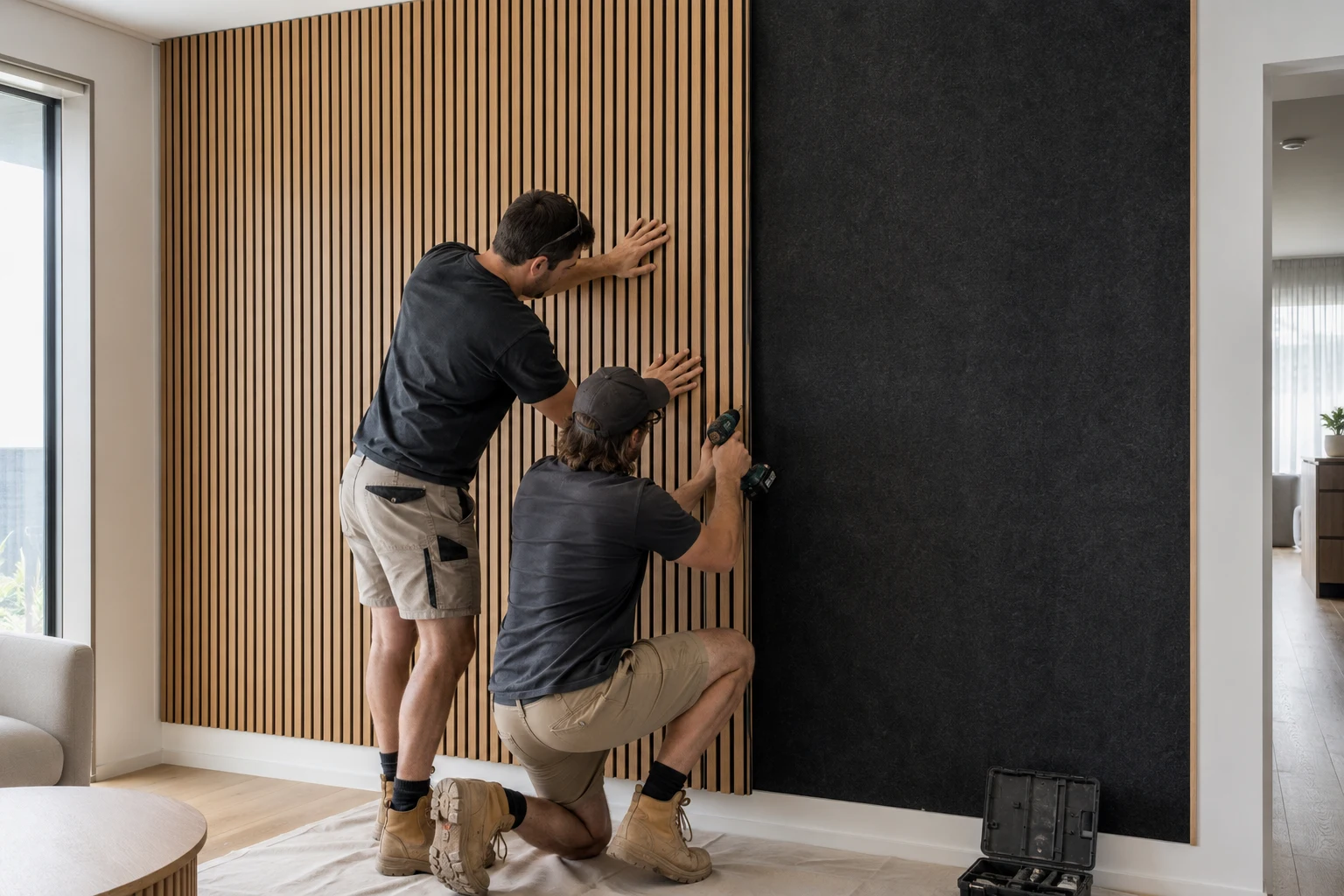
How to Get the Most From an Acoustic Panel Installation
Be clear about the problem you are trying to solve. Acoustic treatment and soundproofing are different solutions. If the goal is to reduce echo and improve how a room sounds, acoustic panels are the right solution. If the goal is to stop noise travelling between rooms or block external noise, panels will not solve it.
Do not try to cover every surface. A common misconception is that more panels always means better acoustic results. Covering every surface in a room with absorption creates a dead, unnatural sound that is as unpleasant as excessive echo. Targeted placement at primary reflection points, such as the side walls parallel to speakers, the ceiling above the listening position, and the front wall behind screens or speakers, delivers better results than blanket coverage.
Match the material to the application. Open cell foam suits a recording setup or podcast room. PET polyester suits a residential living room or office where both acoustic improvement and aesthetic appeal matter. Mineral wool or rigid fibreglass suits a commercial space where maximum performance and fire rating compliance are required. Wood wool suits a commercial or hospitality space where durability and a distinctive aesthetic are both priorities.
Consider ceiling treatment as well as walls. In rooms with hard floors, such as timber, concrete, or tiles, the ceiling is often a more effective treatment surface than the walls because it is the primary reflection point for floor-to-ceiling sound bounce. Ceiling panels or suspended baffles can deliver a significant acoustic improvement in open plan spaces where wall-mounted panels alone are insufficient.
Book a site assessment before specifying anything. The right panel, the right quantity, and the right placement all depend on the specific dimensions, surface materials, and use of your space. A site assessment from Northside Joinery produces a clear recommendation before any panels are purchased or installed.
Ready to improve your space? James Taliana has been installing acoustic panels and custom joinery across Melbourne for 16 years. Contact Northside Joinery today for an honest conversation about your acoustic project before you commit to anything.
Frequently Asked Questions
How much does acoustic panelling cost in Melbourne?
As a rough guide, acoustic panel installation costs in Melbourne in 2026 depend on the panel material chosen, the area to be treated, ceiling height, and the complexity of the job. Material costs are additional and vary significantly by panel type: entry-level recycled PET polyester and open cell acoustic foam sit at the lower end of the cost range, while mineral wool, rigid fibreglass, and wood wool panels sit higher. A small residential room with partial wall treatment will cost significantly less than a full commercial installation requiring fire-rated panels and ceiling treatment. These are indicative observations only. The only way to get accurate pricing for your specific project is to book a site assessment with Northside Joinery.
Do acoustic panels actually work?
Yes, acoustic panels work effectively at reducing echo and reverberation within a room. They absorb sound waves that would otherwise bounce off hard surfaces like plasterboard walls, glass, and timber floors, reducing the build-up of reflected sound that makes a room feel noisy, echoey, or fatiguing to be in. The key distinction is that acoustic panels treat the sound quality within the room. They are not soundproofing and they do not prevent sound from travelling between rooms or stop neighbour noise. If the goal is to improve how a room sounds for conversation, music, recording, or home theatre, acoustic panels are an effective solution. If the goal is to block noise from outside or between rooms, a different approach is required.
What is the difference between acoustic treatment and soundproofing?
Acoustic treatment and soundproofing are different solutions to different problems. Acoustic treatment uses sound-absorbing panels installed on walls and ceilings to reduce echo and reverberation within a room, improving the sound quality of conversations, music, and audio reproduction in that space. Soundproofing uses mass, decoupling, and air sealing to prevent sound from travelling between rooms or through walls and floors. Acoustic panels from Northside Joinery provide acoustic treatment. They will significantly improve how a room sounds. They will not stop sound from travelling to adjoining rooms or block external noise. Understanding this distinction before purchasing or installing panels avoids disappointment and ensures the right solution is applied to the actual problem.
Is acoustic panelling still on trend in Melbourne in 2026?
Yes. Timber slat acoustic panels and recycled PET felt panels have become one of the most consistent interior design trends in Melbourne homes and commercial spaces over the past three years and remain strongly popular in 2026. The appeal is that they are genuinely functional as well as decorative: they improve how a room sounds while adding texture, warmth, and visual interest to walls and ceilings. Timber slat panels in oak and walnut tones suit contemporary and Scandinavian-influenced Melbourne interiors. PET felt panels in neutral and earthy tones suit minimalist and organic design directions. Both are durable, low maintenance, and available in configurations that suit residential rooms, home offices, restaurants, and commercial spaces.
Does Bunnings sell acoustic panels and are they worth it?
Bunnings sells basic acoustic foam tiles and some entry-level fabric panels suitable for small DIY applications such as home recording setups and podcast rooms. These products are adequate for light echo control in small spaces but are not the same as professionally installed acoustic panels using commercial-grade materials such as mineral wool, rigid fibreglass, or wood wool. Professional acoustic panels installed by Northside Joinery use materials with NRC ratings from 0.60 to 0.90 and are fire rated to AS/NZS 3837:1998 for commercial applications. For a home theatre, open plan living area, restaurant, or commercial space where acoustic performance and aesthetic finish both matter, professionally installed panels deliver results that DIY products cannot match.