
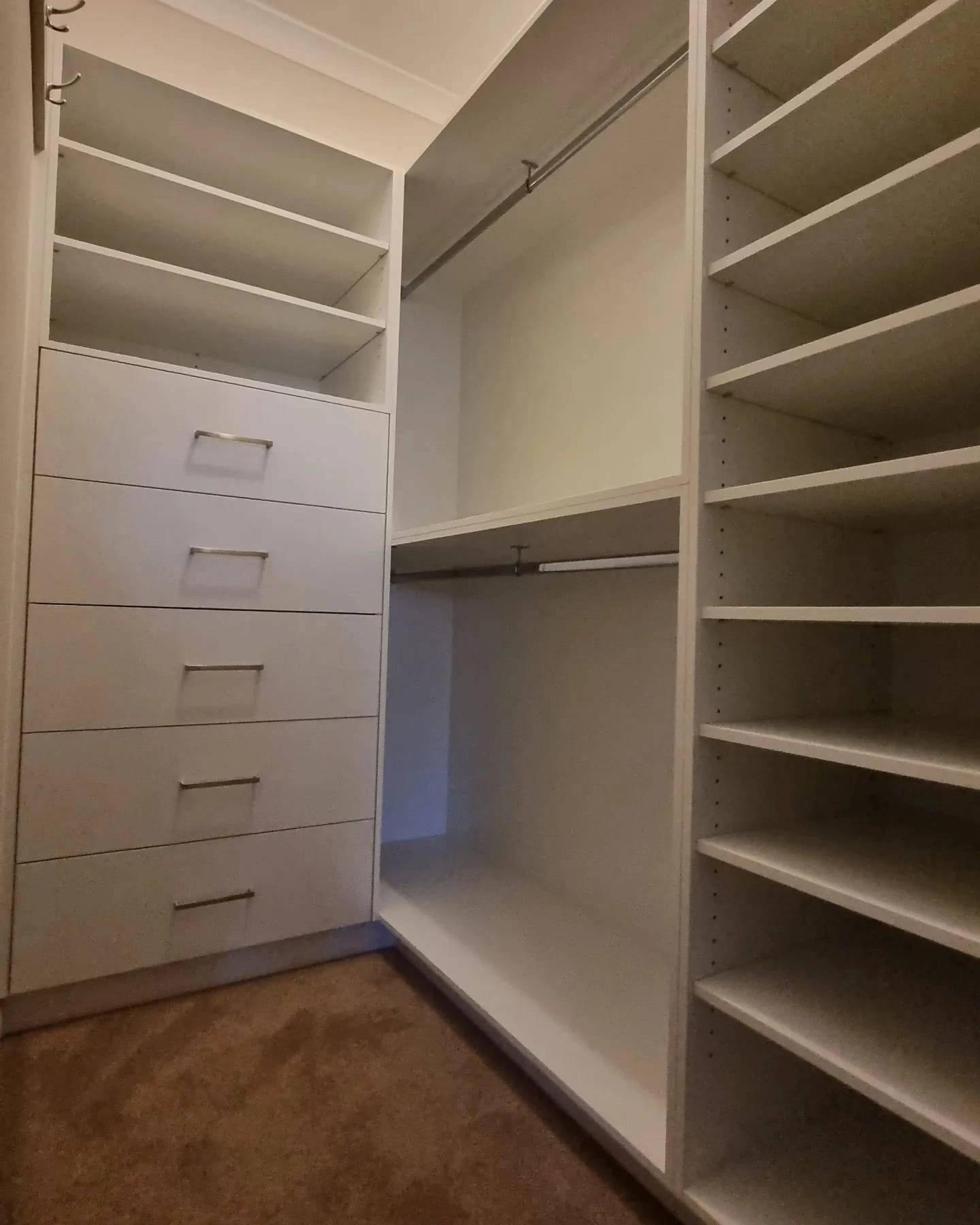
If you have searched this question you have already seen the problem. One site says $2,000. Another says $40,000. Neither number is wrong and neither number is useful.
The range is wide because walk-in wardrobe is not one product. It is a category that covers everything from a flat pack system assembled in a spare room to a fully custom hotel-style dressing room with LED lighting channels, island drawer units, and floor-to-ceiling mirror panels built into a Victorian terrace in Brighton.
I have been building and installing custom joinery in Melbourne for 16 years. In that time I have seen the same frustrations play out repeatedly. Homeowners get a quote that looks reasonable, say yes, and then discover that what they were quoted and what they needed were two different things.
This guide gives you the actual numbers, the actual cost drivers, and honest advice about when custom joinery is worth every dollar and when it genuinely is not.
Before You Read the Numbers
Walk-In Wardrobe Cost Tiers in Melbourne
Entry Level: $3,500 to $7,000
This tier covers modular or semi-custom systems. The components are manufactured to standard sizes and assembled on site. Think Kinsman, Flexi, or a local cabinet maker working with off-the-shelf modules.
What you get at this tier is a wardrobe that fits the approximate dimensions of your space. The word approximate is doing a lot of work in that sentence. Standard modules come in fixed widths. If your alcove is 2,340mm wide and the modules come in 300mm, 400mm, and 600mm increments, the installer fills the gap with a filler panel. It works. It does not look like it was built for that specific space.
This tier is entirely appropriate when the space is a simple rectangle, the walls are plumb, the floor is level, and you are not trying to carry it as a feature of the room.
Where it falls short is older Melbourne homes. Victorian and Edwardian terraces, California bungalows, post-war brick veneer homes. These properties have walls that are rarely plumb and floors that have moved with the house over decades. Standard modules installed in a non-plumb space will either have visible gaps or require so much shimming and filler that the cost advantage disappears.
What is included at this tier:- Modular hanging rails and shelving
- Basic soft-close drawers
- Standard board finishes in white or a wood grain laminate
- Basic installation
- Wall preparation or patching
- Lighting installation
- Mirror panels
- Carpet or flooring cuts
- Demolition of existing built-ins
These are indicative ranges. A simple rectangular space with plumb walls will sit toward the lower end. Complex layouts, non-plumb walls, heritage homes, or premium hardware selections will push costs higher.
Mid Range: $7,000 to $14,000
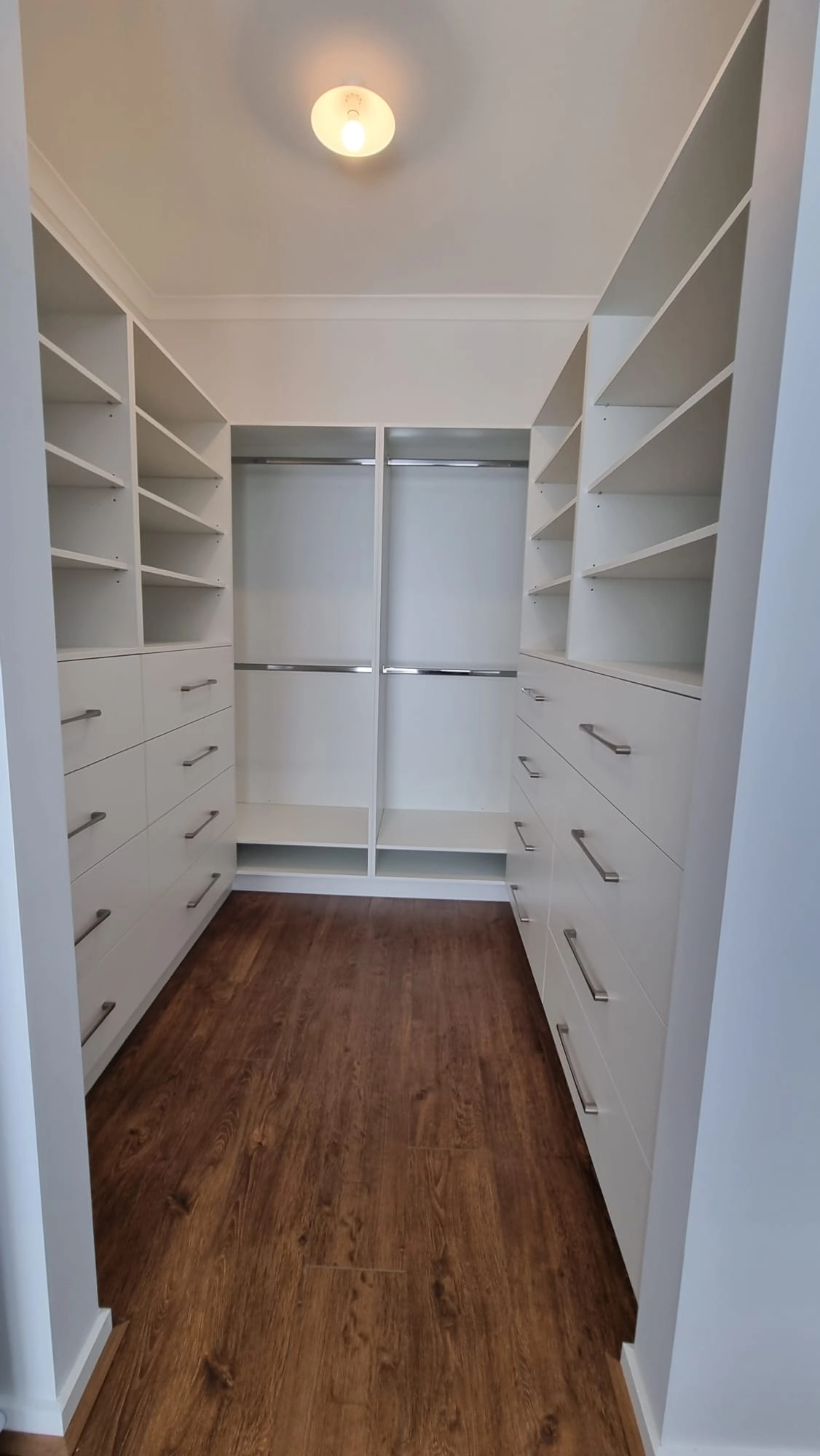
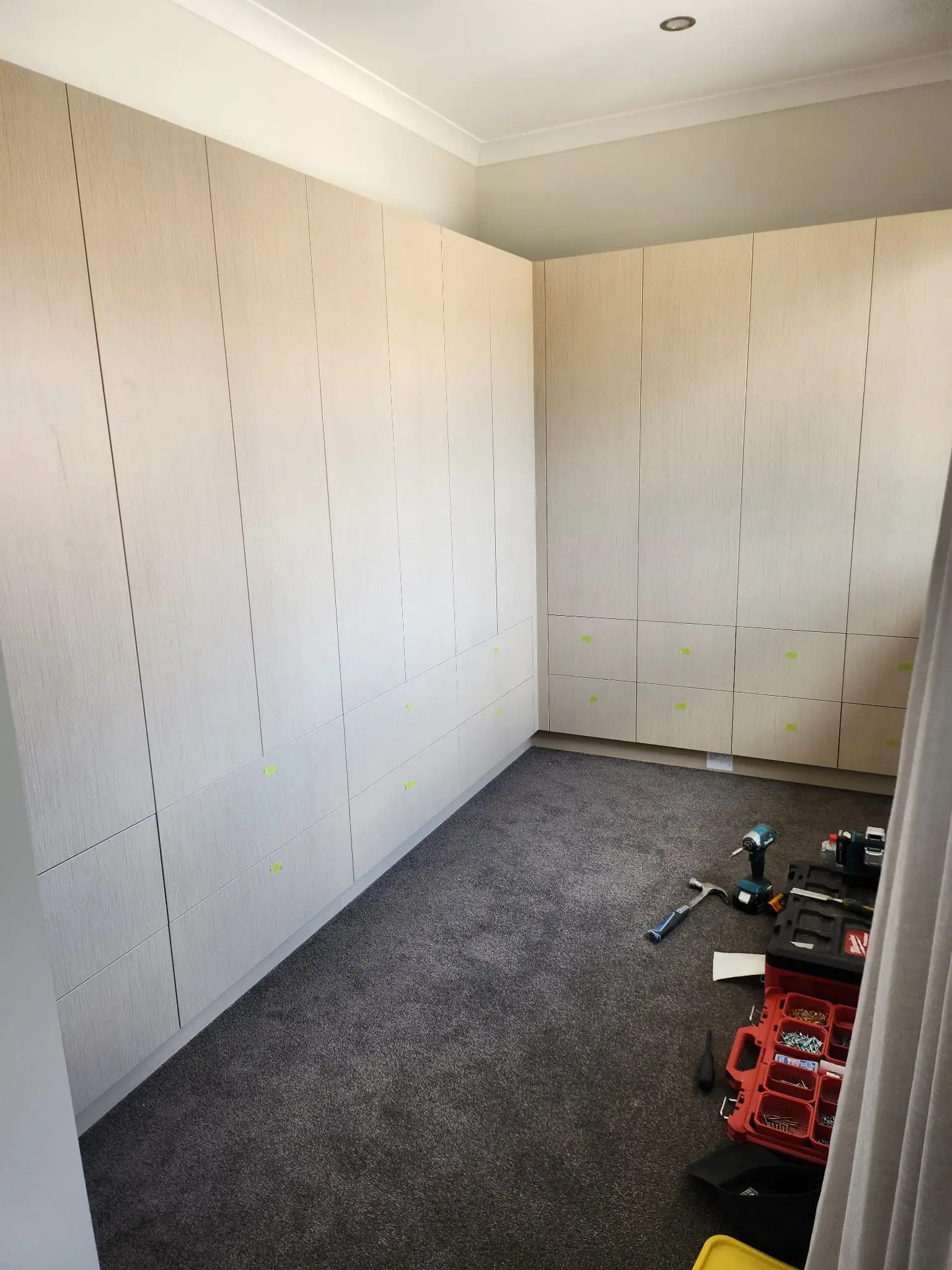
This is where most Melbourne homeowners land when they want something that feels considered rather than assembled. A mid-range walk-in wardrobe at this tier is typically fully custom. Every panel is cut to the specific dimensions of the space after a site measure, not adjusted to fit a standard module.
The difference shows immediately. Panels run floor to ceiling without gaps. Corners are properly returned. The hanging configuration is designed around what you actually own, not what the module system offers.
At this tier the finish quality also changes. Two-pack polyurethane doors instead of laminate wrapped MDF. Full extension soft-close drawers with dovetail joinery. LED lighting integrated into the carcasses rather than surface mounted.
What is included at this tier:- Fully custom cabinetry built to site measure
- Two-pack polyurethane or premium laminate finishes
- Full extension soft-close drawers
- Custom hanging configurations including double hanging, long hanging, shoe shelving, and accessory drawers
- Integrated LED lighting
- Basic mirror panel integration
- Island drawer units, the single biggest cost adder in a walk-in wardrobe
- Floor-to-ceiling mirror panels with frameless edges
- Timber veneer finishes instead of painted or laminate
- Custom handles and hardware
Actual costs vary based on your specific layout, material selections, hardware choices, and site conditions. Two wardrobes that look identical on paper can differ by thousands of dollars based on what is inside the quote.
Premium: $14,000 to $25,000+
A premium walk-in wardrobe in Melbourne at this tier is genuinely a room within a room. Natural timber veneer panels, stone or timber island benchtops, integrated seating, full-height mirror walls, concealed LED channel lighting, and joinery designed with an interior designer or architect.
At this tier the cost of the cabinetry alone can exceed the total cost of a mid-range project. Every element is bespoke. Lead times are longer because the manufacturing complexity is higher.
This tier makes sense in a home where the master bedroom is large enough to accommodate a genuine dressing room and where the finish quality of the wardrobe needs to match a broader renovation investment.
Every project at this tier is unique. Pricing depends entirely on the scope, specification, and complexity of your specific project. These figures are a guide only.
Book a free measure and quote with James. Fixed scope, documented pricing, 8-week delivery guarantee →What Actually Drives the Cost of a Walk-In Wardrobe
Size: But Not in the Way You Think
The obvious assumption is that a bigger wardrobe costs more. That is true but the relationship is not linear.
A walk-in wardrobe that wraps three walls of a 3m x 3m space costs significantly more than one that runs along a single 3m wall, even though the room dimensions are similar. The reason is corners. Internal corner joinery in a wardrobe requires specific construction to maintain full access to hanging space and drawers. It adds both material and labour cost that is disproportionate to the extra linear metres.
The other size factor is ceiling height. Melbourne homes vary from standard 2.4m ceilings in post-war properties to 3.2m ceilings in Victorian and Edwardian homes. Custom joinery to ceiling height in a high-ceiling room costs more than the same design at standard height: more material, more complex installation, heavier panels.
Materials: The Biggest Variable
The single biggest cost lever in a walk-in wardrobe is the board and finish specification.
Moisture resistant MDF with a laminate wrap is the standard entry point. It is durable, consistent in colour, and easy to keep clean. It is also immediately identifiable as the material used in flat pack systems.
Two-pack polyurethane over MDF is the step up most Melbourne cabinet makers recommend for a walk-in wardrobe that will be a feature space. The finish is harder, the colour depth is richer, and it does not have the slightly plastic look of laminate. It is also more expensive, typically 25 to 35 percent more for the doors and panels alone.
Timber veneer is the premium specification. Real wood grain on the panel faces with a clear lacquer finish. It requires more skill to manufacture, more care to install, and more maintenance over time. It is the right choice when the wardrobe needs to read as furniture rather than cabinetry.
Hardware: The Cost Nobody Budgets For
This is the category that surprises people most.
A full extension soft-close drawer runner in a quality European brand like Blum or Grass costs between $40 and $80 per drawer. A wardrobe with six drawers has between $240 and $480 in runners before the drawer box or panel is counted.
Multiply that across handles, hinges, pull-out shoe racks, tie and belt organisers, and LED lighting fittings, and the hardware budget in a well-specified mid-range wardrobe can easily reach $1,500 to $3,000.
This is why two quotes for the same wardrobe can differ by thousands of dollars and both quotes can be honest. One is specifying Blum runners and branded LED fittings. The other is specifying generic hardware at a third of the price that will feel noticeably different within two years.
All hardware figures above are indicative. Your actual hardware costs will depend on the specification you choose.
The Hidden Costs Nobody Mentions
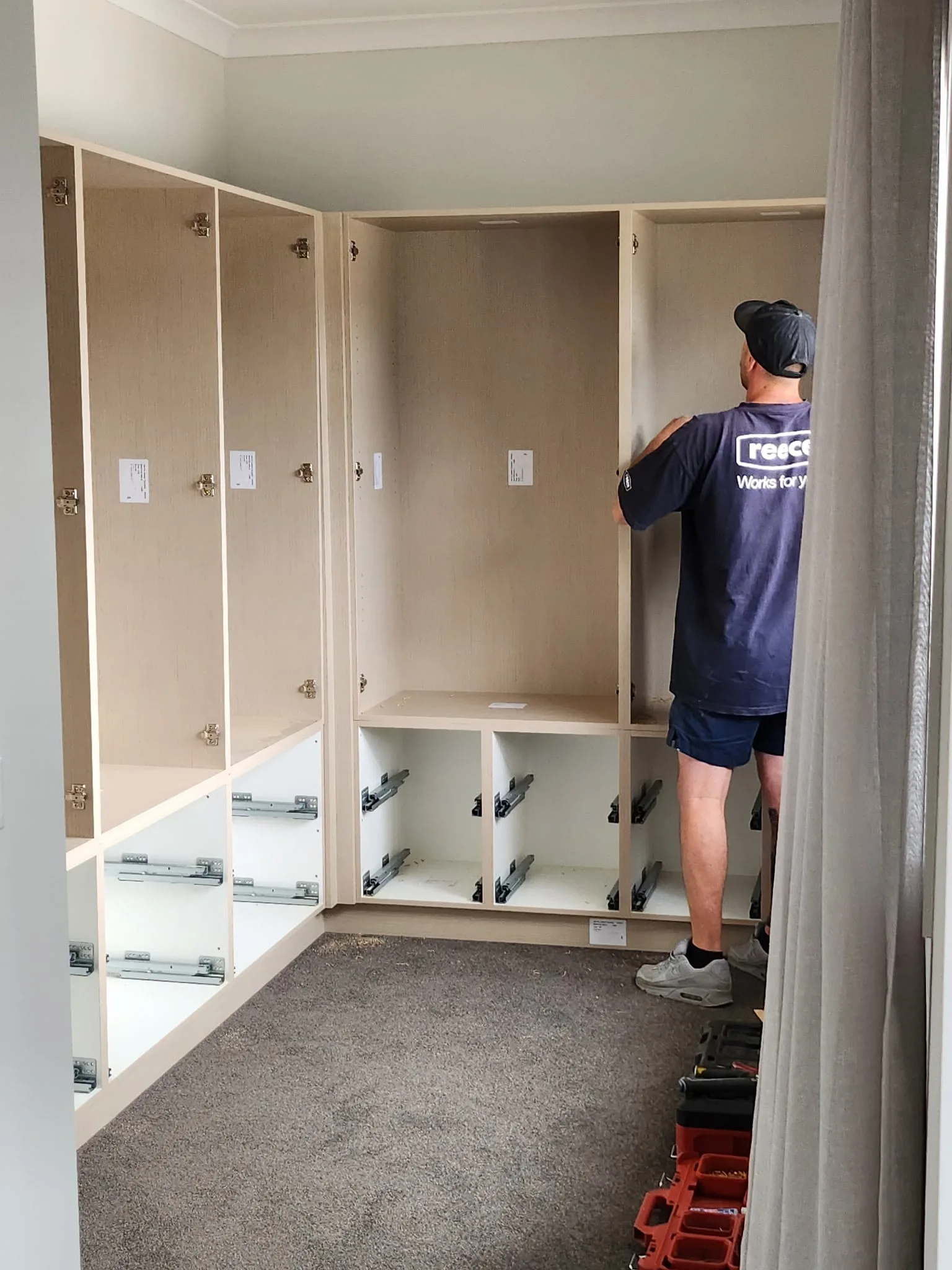
Demolition. If there is an existing built-in wardrobe in the space it needs to come out. Demolition and disposal typically adds $300 to $800 depending on the size and construction of the existing unit. This figure is indicative and depends on the specific job.
Wall preparation. Custom joinery installed against a wall that has been patched or damaged during demolition requires the wall to be made good first. This is typically a plasterer or painter cost that sits outside the wardrobe quote.
Carpet cutting. A floor-to-ceiling wardrobe installed over existing carpet requires the carpet to be cut back to the wall line so the kick rail sits on the slab. This is either a carpet layer cost or an allowance in the installation quote, but it needs to be somewhere in the budget.
Lighting circuits. Integrated LED lighting in a wardrobe requires a power point or hardwired connection. If there is no existing power source in the wardrobe space an electrician needs to run a circuit. This cost is entirely separate from the joinery quote and is commonly discovered after the wardrobe is installed.
Custom vs Flat Pack: The Honest Answer
The internet will tell you custom joinery is always better than flat pack. That is not the honest answer.
Flat pack systems from Kinsman, Flexi, or similar suppliers are well-engineered, reasonably durable, and entirely appropriate for a large number of Melbourne homes. If your wardrobe space is a simple rectangle, your walls are plumb, and the wardrobe is a functional storage solution rather than a design feature, a good flat pack system installed properly will serve you well.
The cases where flat pack consistently falls short are older Melbourne homes with non-plumb walls, spaces with awkward dimensions that standard modules cannot fill cleanly, and situations where the wardrobe is a feature of the room that needs to look considered.
The other honest point is warranty and repair. When a flat pack module fails (a runner breaks, a hinge gives out, a panel swells from moisture) you are dealing with a product warranty from a retailer. When a custom wardrobe has an issue you are dealing directly with the cabinet maker who built it.
In 16 years of building and installing joinery in Melbourne I have replaced more flat pack hardware for clients than I have ever needed to repair in custom work.
How Long Does a Walk-In Wardrobe Take in Melbourne?
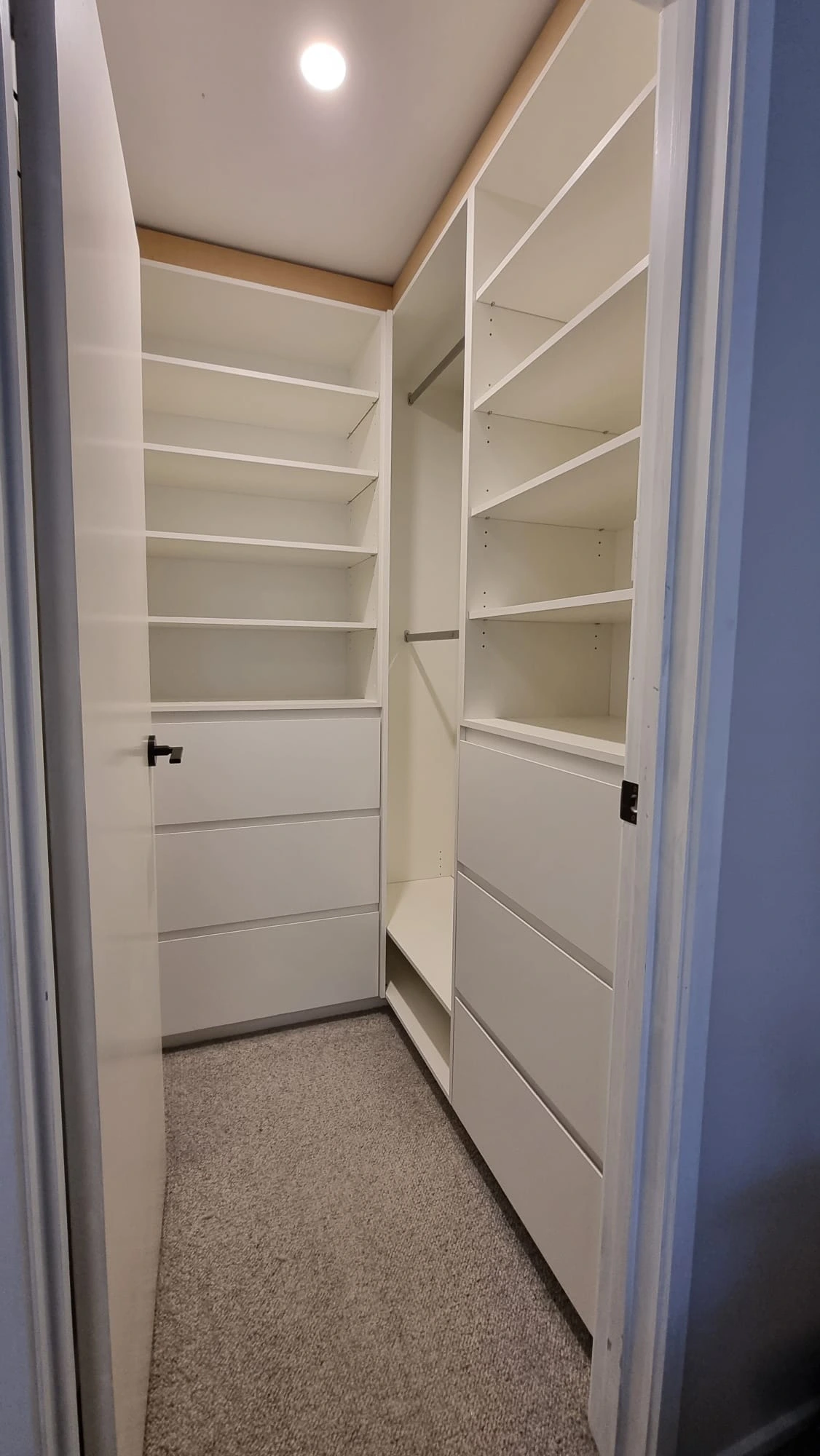
From initial measure to installation day, a custom walk-in wardrobe at Northside Joinery takes approximately 6 to 8 weeks.
The timeline breaks down as follows: measure and design sign-off takes one to two weeks, manufacturing in our workshop takes three to four weeks, and installation is typically completed in one to two days depending on the complexity of the project.
The reason the timeline matters is coordination. If you are mid-renovation and the wardrobe installation is the final trade on site, a six to eight week lead time needs to be factored into your programme from the moment you sign off on the design.
Frequently Asked Questions: Walk-In Wardrobe Cost Melbourne
How much does a custom walk-in wardrobe cost in Melbourne?
A custom walk-in wardrobe in Melbourne typically costs between $7,000 and $18,000 depending on size, materials, and hardware specification. Entry level modular systems start from $3,500 and premium fully custom wardrobes with island units and mirror panels can exceed $25,000. These are indicative ranges only. Your actual cost depends on the specific scope, materials, and site conditions of your project.
How much do built-in wardrobes cost in Melbourne?
A standard built-in wardrobe in Melbourne ranges from $1,500 to $5,000 for a single bay modular system up to $8,000 to $12,000 for a fully custom floor-to-ceiling unit with drawers and premium finishes. These are indicative ranges. Actual costs vary based on scope and specification.
Is it cheaper to build or buy a wardrobe in Melbourne?
Buying a flat pack system is cheaper upfront, typically $1,500 to $5,000 installed. Building a custom wardrobe costs more but delivers a better fit, longer lifespan, and higher quality hardware. For older Melbourne homes with non-plumb walls, custom joinery often works out more cost effective because flat pack systems require extensive modification to fit correctly. Your best option depends on your specific space and requirements.
How much would a carpenter charge to build a wardrobe in Melbourne?
A carpenter or cabinet maker in Melbourne typically charges $80 to $120 per hour for installation labour. A full custom wardrobe installation including measure, manufacture, and install is typically quoted as a fixed project price rather than an hourly rate. These are indicative figures only and will vary based on the complexity and scope of your specific project.
Are Kinsman wardrobes worth it?
Kinsman wardrobes are a reasonable option for a simple, plumb, rectangular space where the wardrobe is a functional storage solution rather than a design feature. They are not the right choice for older Melbourne homes with non-plumb walls, high ceilings, or spaces where the wardrobe needs to read as custom joinery. The hardware quality is adequate but noticeably below European cabinet-grade hardware.
What size room do you need for a walk-in wardrobe in Melbourne?
A functional walk-in wardrobe requires a minimum of 1.8 to 2 linear metres of hanging space and a 900mm to 1,000mm clear walking aisle. In practice this means a room of at least 2m x 2m. Smaller spaces work better as reach-in wardrobes with sliding or bifold doors rather than a genuine walk-in layout.
How long does a custom walk-in wardrobe take to build in Melbourne?
A fully custom walk-in wardrobe takes 6 to 8 weeks from design sign-off to installation. This includes manufacturing time and scheduling the installation. Modular systems can be installed in 2 to 4 weeks depending on supplier lead times.
Getting a Quote That Matches the Invoice
The most common complaint I hear from homeowners who have been through a wardrobe project before is that the final invoice did not match the quote. The gap is almost always in one of three places: demolition costs that were not included, hardware that was specified as an allowance rather than a fixed price, or lighting costs that were assumed to be covered by an existing circuit that turned out not to be there.
When you request a quote for a custom walk-in wardrobe in Melbourne, ask three questions before you compare numbers:
- What is excluded from this quote, specifically demolition, wall preparation, electrical, and carpet cutting?
- Are the hardware specifications fixed or are they allowances?
- What is the payment schedule and what triggers the final payment?
A quote that answers all three clearly is a quote you can compare meaningfully. A quote that leaves any of those three unanswered is a starting number, not a final price.